
Quarry Tile and Grout
Common kitchen tile can trap greasy soil in textured surfaces and recessed grout. Agitation and soil recovery are adjusted to the condition of the joints and surrounding equipment.
Serving Columbus, Ohio & surrounding areas
Open 24/7
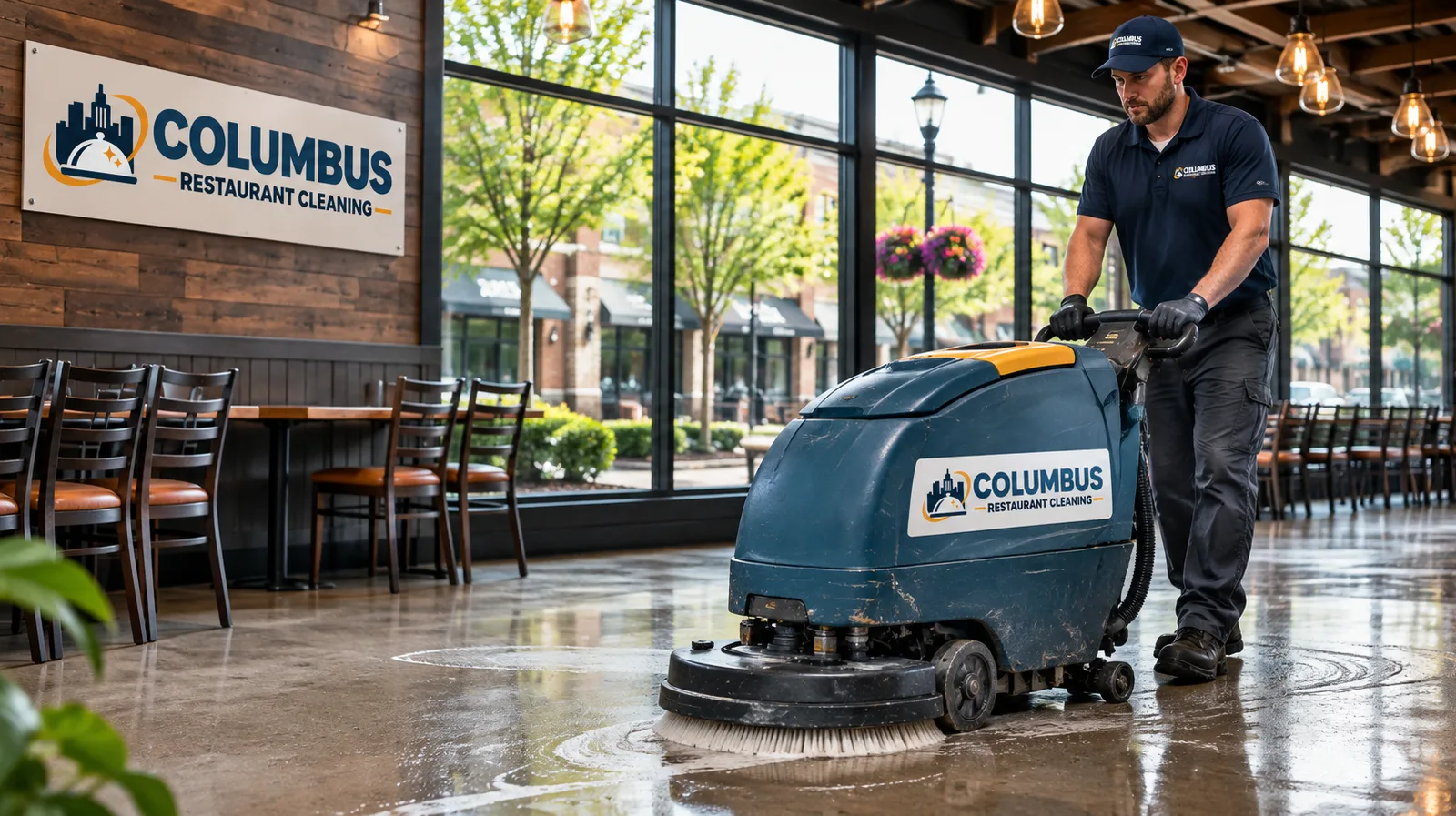
Deep cleaning for dining rooms, kitchens, bars, and service areas, scheduled around your operating hours and built for the grease, soil, and foot traffic of hospitality work.
Restaurant Floor Cleaning Dublin businesses can schedule should address more than visible crumbs and tracked-in soil. Grease can migrate from the cook line into service aisles, grout can hold dark residue, and dining-room finishes can lose their uniform appearance under daily traffic. Columbus Restaurant Cleaning develops the scope around the flooring material, soil load, equipment access, and time available before the next shift.
Our team works as a restaurant service company Columbus homeowners rely on while adapting each restaurant cleaning plan to a commercial food-service setting. That means separating kitchen tools from front-of-house tools, placing wet-floor controls, treating edges and corners by hand, and selecting chemistry compatible with the floor. The goal is a floor that looks properly cleaned, has no greasy film underfoot, and is ready for the restaurant's normal opening routine.
Dublin properties present different access and scheduling needs. Bridge Park restaurants often coordinate cleaning around evening dining and mixed-use building access. Historic Dublin can involve smaller rooms, tighter entries, or older floor assemblies that need careful testing. Restaurants near the Sawmill Road corridor may face heavy lunch and dinner traffic, while Tuttle-area operations often have larger dining rooms and long service aisles. Winter moisture and deicing residue tracked through Central Ohio entrances also call for extra attention to mats, vestibules, and nearby floor finish.
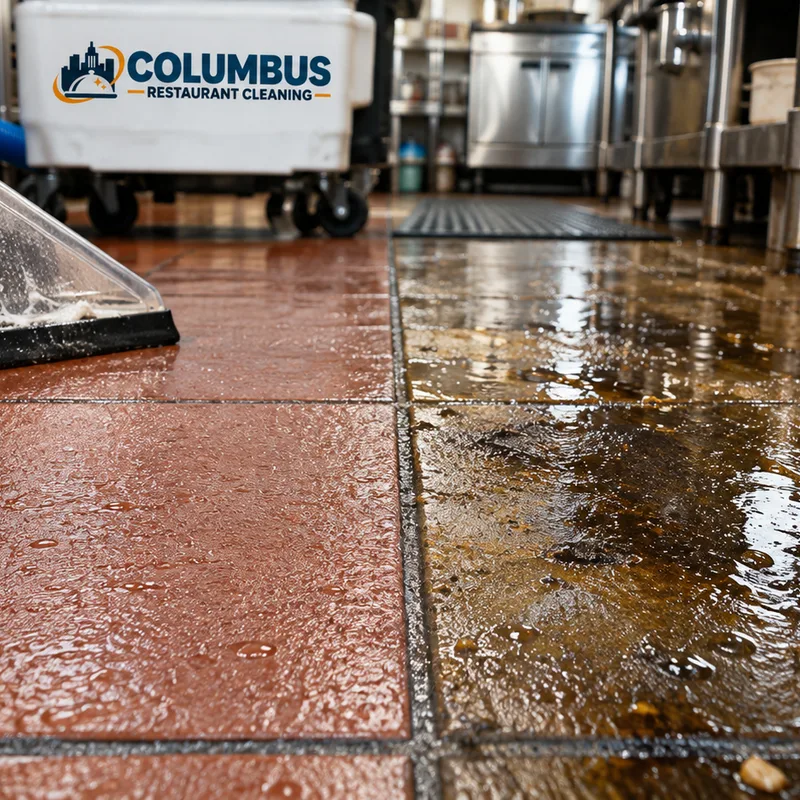
Kitchen floors collect a demanding mix of cooking oil, food residue, detergent film, and soil carried between storage, prep, dishwashing, and waste areas. Mopping alone can spread that mixture rather than remove it. Deep kitchen care starts with dry soil removal, targeted degreasing, dwell time, mechanical agitation, controlled recovery, and rinsing when the selected chemical requires it.
We pay close attention to cook-line edges, under movable equipment, floor-to-wall transitions, grout joints, dish areas, and routes leading to back doors or grease handling points. Degreasers are matched to the surface and used according to label directions. More chemical is not automatically better. Excess concentration can leave residue, affect finishes, or create unnecessary rinsing work.
Commercial kitchens must also keep cleaning chemicals away from exposed food, utensils, and food-contact surfaces. Franklin County Public Health regulates food-service operations in much of the county, so managers need a cleaning plan that fits their own food-safety procedures and inspection obligations. Our floor work supports those procedures, but it does not replace required employee sanitation, spill response, pest control, or equipment maintenance.
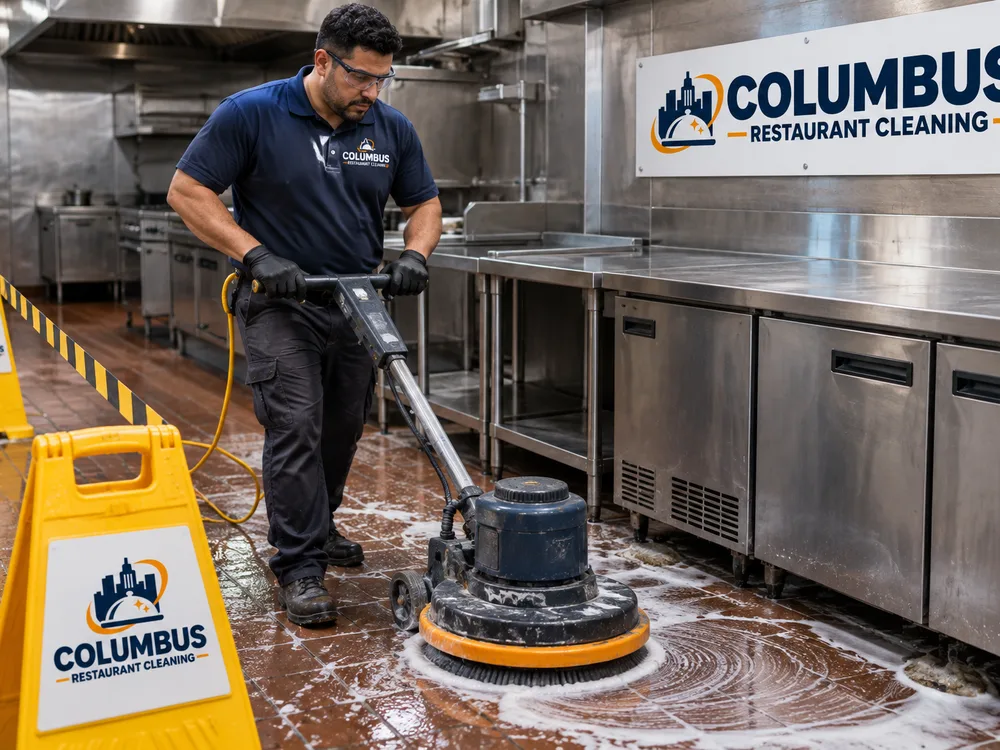
Common kitchen tile can trap greasy soil in textured surfaces and recessed grout. Agitation and soil recovery are adjusted to the condition of the joints and surrounding equipment.
Dining rooms and service areas may use LVT, sheet vinyl, or other resilient materials. Cleaner strength, water use, and machine pads must suit the manufacturer's care requirements.
Concrete in bars, dining rooms, or back-of-house areas needs cleaning compatible with its sealer. A test area helps identify coating sensitivity before broader treatment.
Tracked grit, beverage spills, chair marks, and winter residue often concentrate around vestibules, host stations, server paths, and tables with the highest turnover.
Sticky drink residue and narrow working lanes require focused edge cleaning. Equipment and stored items are moved only when the agreed scope and safe handling allow it.
These routes can carry moisture and grease across the kitchen. Cleaning addresses the travel path as well as corners, thresholds, and floor transitions where residue accumulates.
We identify flooring types, greasy zones, grout condition, drains, thresholds, movable equipment, power or water access, and any areas that must remain available. Existing damage or loose flooring is documented before work starts.
The written scope defines included rooms, planned methods, access responsibilities, and timing. Work may be scheduled after closing, before opening, or during another low-activity period based on the restaurant's operating plan.
Loose debris is removed, approved movable items are relocated, and warning signs are placed. Food, utensils, packaging, and sensitive equipment must be protected or removed before chemicals or machines enter the area.
Depending on the floor, the work may use neutral cleaner, alkaline degreaser, low-speed agitation, an autoscrubber, grout brushing, or controlled wet recovery. Technicians monitor edges and transitions that machines cannot reach.
Spent solution is recovered rather than left to dry on the floor. The crew checks for remaining film, standing moisture, missed corners, and any areas that need another pass before equipment or furniture is returned.
The right frequency depends on traffic, menu, floor texture, weather exposure, and the restaurant's daily cleaning program. A high-volume kitchen with frying operations may need more frequent degreasing than a dining room with sealed resilient flooring. Bar lanes, dish areas, and kitchen exits can also require a different cycle than guest-facing rooms.
A useful plan separates routine employee duties from periodic professional cleaning. Staff can handle spills, sweeping, mat care, and scheduled mopping during normal operations. Periodic service can focus on mechanical scrubbing, embedded soil, grout, perimeter buildup, and broader recovery of greasy residue. This division keeps the scope clear and helps managers avoid waiting until soil is visibly established.
Dublin's wet and snowy periods can increase the amount of moisture, grit, and deicing material entering through guest and employee doors. Entry mats should be maintained as part of daily operations, while deeper floor cleaning can address the residue that travels beyond the matting. During service planning, we also discuss drying time and safe reopening rather than assuming every surface will be ready on the same timetable.
Professional restaurant floor cleaning in Dublin typically costs about $300 to $1,500 per visit, while large kitchens, extensive grout work, or heavy grease buildup may cost more. A smaller dining area with open access generally falls toward the lower end; combined front- and back-of-house deep cleaning falls higher.
Final price depends on square footage, flooring material, soil level, furniture or equipment movement, access, cleaning frequency, and the time window available. Add-on coating or finish work, when suitable, is priced separately. Exact cost is confirmed after a walkthrough or detailed scope review.
A walkthrough turns broad cleaning goals into a written scope that accounts for flooring, grease levels, access, and the hours available between restaurant shifts.
Call to ScheduleYes, after-hours scheduling may be available when the building, kitchen, and required utility access are available to the crew. Dublin restaurants should allow enough time for cleaning, residue recovery, inspection, and drying before employees return or food preparation resumes.
A focused floor cleaning may take several hours, while a larger kitchen and dining-room scope can require a full overnight work window. Square footage, grease buildup, grout condition, equipment movement, and drying needs determine the schedule. A walkthrough provides a more useful estimate than floor area alone.
Cleaning under movable equipment can be included when it is identified in the scope and can be moved safely without disconnecting utilities. Fixed, heavy, hot, or hard-connected equipment may require restaurant staff or a qualified equipment provider to make the area accessible before cleaning begins.
Removing grease and detergent film can improve the condition of a contaminated floor, but no cleaning company should promise a slip-proof surface. Slip risk also depends on flooring texture, wear, spills, footwear, drainage, and daily procedures. Damaged or unsuitable flooring may need repair or replacement.
No, pressure washing is unsuitable for many indoor restaurant floors and can force water beneath flooring, into wall assemblies, or toward equipment. Autoscrubbing, low-speed agitation, wet recovery, or controlled hand cleaning is often more appropriate. The method should follow the material's care requirements and the property's drainage limits.
The frequency should be based on soil load, menu, traffic, floor texture, and the effectiveness of daily care. Frying operations, busy bars, textured quarry tile, and winter entry residue can shorten the interval. Some properties need recurring service, while others schedule periodic deep cleaning after a condition review.
Staff should secure food and utensils, remove floor-level stock, empty accessible waste, identify damaged areas, and confirm who may move equipment or furniture. The restaurant should also provide the agreed building access and keep employees out of marked wet-work zones until the floor is released.
Tell Columbus Restaurant Cleaning about the flooring, problem areas, operating hours, and access constraints. We will help define a practical scope for your Dublin restaurant before work begins.
Tell us about your restaurant and cleaning needs. We’ll follow up to discuss the right scope for your space.