
Kitchen Deep Cleaning
Detailed work targets grease and residue on accessible equipment exteriors, prep-area surfaces, backsplashes, shelving, walls, floors, base edges, and spaces under or behind movable equipment.
Serving Columbus, Ohio & surrounding areas
Open 24/7
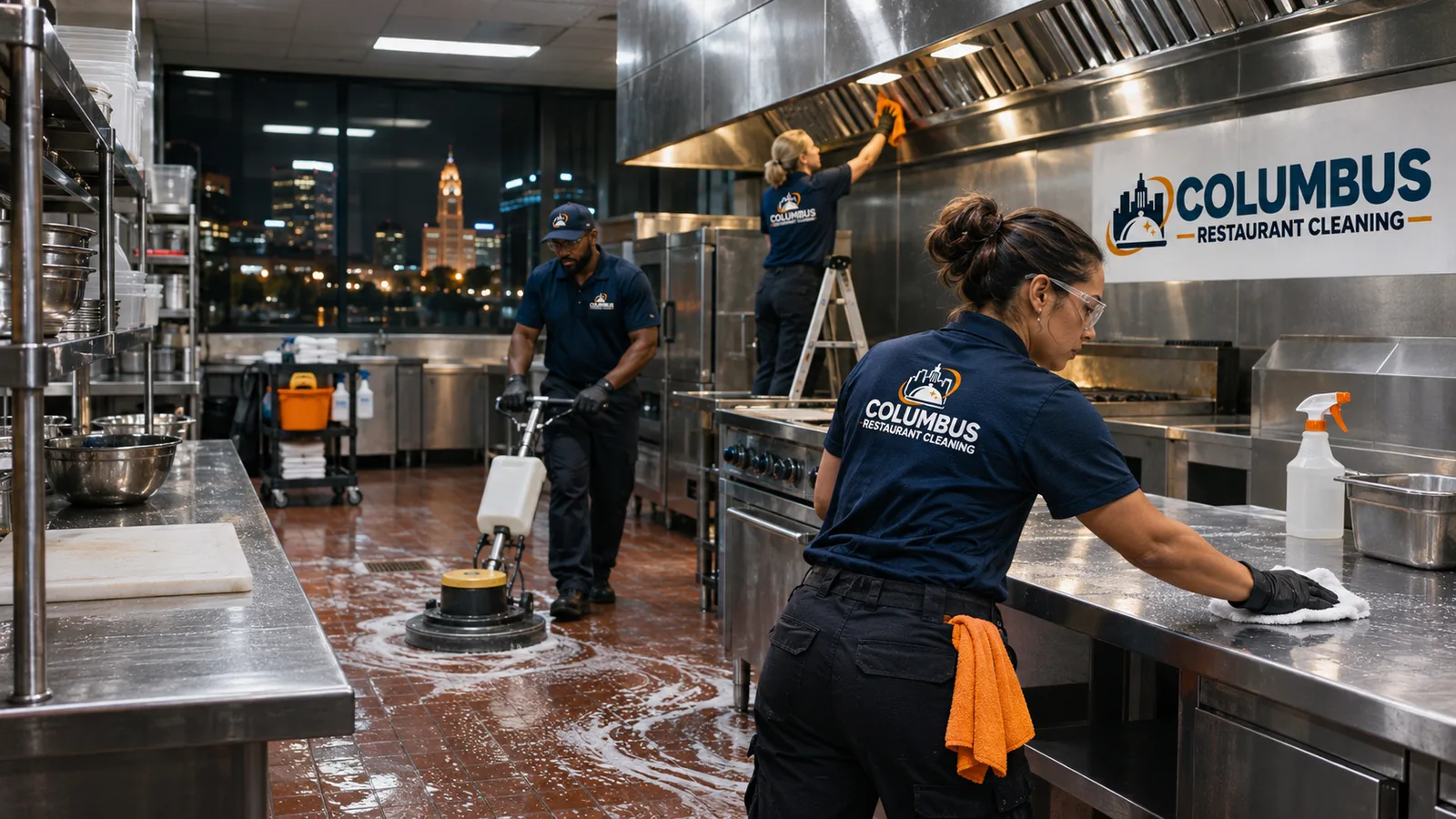
Detailed cleaning for commercial kitchens, dining areas, walk-in coolers, and hard-to-reach surfaces, scheduled around your operating hours.
Columbus Restaurant Cleaning provides the focused labor and commercial methods needed to clean areas that routine closing work may not fully address. As a Restaurant Cleaning Company, we develop the scope around your equipment, floor plan, operating schedule, and highest-priority buildup rather than relying on a generic checklist.
Our team works as a professional restaurant service company in Columbus, OH, cleaning kitchens, dining rooms, storage spaces, walk-in units, and overhead surfaces with attention to access and material compatibility. The goal is a practical result: remove accumulated grease, food residue, dust, and soil without disrupting your next shift.
A deep clean can be planned as a one-time reset, preparation for an inspection or ownership transition, or recurring detailed cleaning that complements the restaurant's daily sanitation routine. We serve operators near our West Broad Street base and across the Columbus area. Each job starts with a review of the facility so the written scope reflects the actual conditions.
Detailed work targets grease and residue on accessible equipment exteriors, prep-area surfaces, backsplashes, shelving, walls, floors, base edges, and spaces under or behind movable equipment.
Walk In Cooler Cleaning can cover floors, walls, shelving, door surfaces, handles, gaskets, and accessible fan guards. Food and inventory handling responsibilities are agreed on before work begins.
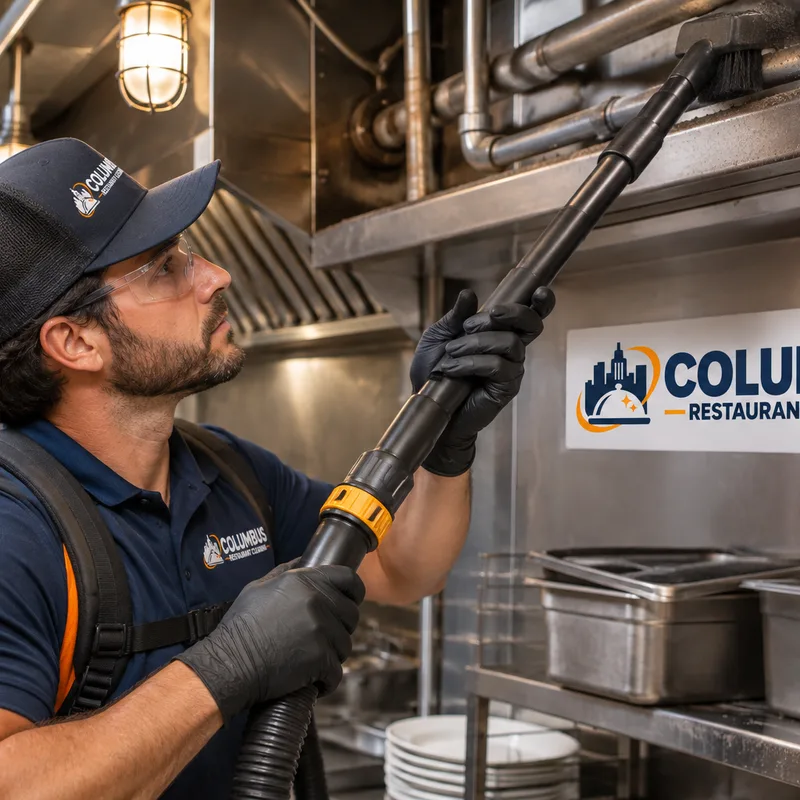
High Dusting in Columbus restaurants addresses dust on accessible pipes, duct exteriors, ledges, light housings, vents, and other overhead surfaces using suitable extension tools and controlled methods.
Restaurant Detailed Cleaning can include chairs, tables, booth surfaces, partitions, baseboards, ledges, washable wall areas, entry glass, and floor edges that need more attention than routine service provides.
Dry storage, server stations, beverage areas, corridors, and receiving spaces can be added to the scope. Cleaning is planned around inventory, movable fixtures, and access restrictions.
Operators can prioritize specific trouble spots instead of booking an entire facility. Common requests include floor edges, buildup behind equipment, stainless steel exteriors, and hard-to-reach horizontal surfaces.
A commercial kitchen contains several kinds of soil in a compact working area. Grease can combine with dust on equipment sides and overhead surfaces, while food debris collects along wall lines, casters, table legs, and under movable appliances. Effective Kitchen Deep Cleaning starts by identifying the soil, the surface beneath it, and the safest way to reach it.
The process may include dry removal of loose debris, application of an appropriate degreaser, controlled dwell time, agitation, recovery of loosened soil, and rinsing or wiping as required by the product and surface. Stainless steel, painted surfaces, resilient flooring, tile, grout, and rubber gaskets do not all tolerate the same chemical strength or tools. Test spots and manufacturer directions help prevent avoidable damage.
Commercial Kitchen Deep Cleaning in Columbus must also fit the restaurant's service schedule. Short turnaround windows can affect crew size, task order, equipment access, and drying time. Cold Ohio weather adds another practical concern: wet entry floors need controlled cleaning and adequate drying when crews, vendors, and staff track in moisture or deicing residue.
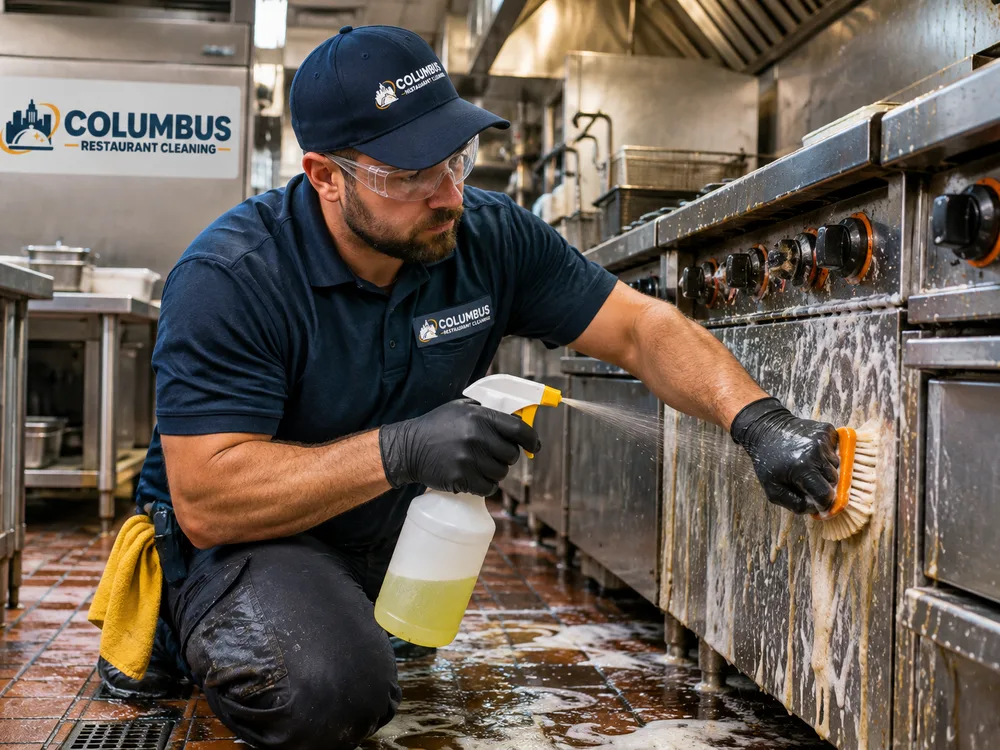
We review the kitchen, dining room, storage spaces, walk-in units, overhead areas, and access conditions. The walkthrough identifies fixed equipment, movable items, sensitive surfaces, active leaks, damaged finishes, and areas that are outside the requested scope.
The plan defines which spaces and surfaces are included, who moves inventory or equipment, and when the crew can enter. We also confirm water and electrical access, alarm or key procedures, and the deadline for returning the facility to operations.
The crew gathers loose debris, protects nearby items as needed, stages tools, and confirms that food, utensils, and exposed ingredients are removed or secured by the responsible party. Wet-floor controls and task sequencing help keep the work area organized.
Restaurant Deep Cleaners work through the agreed tasks using degreasing, wiping, agitation, vacuuming, high dusting, and floor-cleaning methods suited to each surface. We avoid mixing incompatible chemicals and follow label directions for dilution and contact time.
We inspect the contracted areas, address any remaining items within the scope, and review the result with the designated contact when scheduling permits. Any inaccessible area, damaged surface, or condition requiring repair is documented rather than concealed.
Walk-in units require careful coordination because stored food, low temperatures, shelving, evaporator components, and floor drains affect how the work can proceed. Before Walk In Cooler Cleaning begins, the operator and cleaning team should decide who removes or relocates products, whether shelving will be emptied, and how food will be kept within required temperature controls. Cleaning does not replace refrigeration maintenance, mold remediation, pest control, or repair of damaged gaskets and panels.
Overhead work needs similar planning. High dusting can release settled material, so it should occur before lower surfaces and floors receive their final cleaning. Access height, ceiling obstructions, occupied areas, and nearby food-contact items determine the equipment and containment approach. Hood interiors, exhaust fans, and ductwork may require specialized kitchen exhaust cleaning and should not be assumed to be part of general high dusting.
This distinction matters in older, compact restaurant spaces in areas such as German Village, where access and storage can be tight, and in the Short North, where operating hours and pedestrian activity may limit staging. In Brewery District and Franklinton facilities, loading access and mixed-use neighbors can also affect arrival times and equipment movement. We account for those conditions when setting the work plan.
A useful proposal should identify surfaces, access assumptions, and exclusions instead of using broad language such as “clean the kitchen.” The agreed scope may cover equipment exteriors, walls, washable ceilings, shelving, prep tables, floor edges, drains, walk-in interiors, dining furniture, and overhead dust. It should also state whether the restaurant's staff must empty shelves, move smallwares, disconnect equipment, or secure food before arrival.
Some work requires a separate trade or a different procedure. Kitchen exhaust system cleaning can involve hood plenums, fans, and ducts. Refrigeration repairs, electrical work, grease-trap pumping, pest treatment, biohazard cleanup, and restoration of porous or damaged materials are distinct tasks. Professional Restaurant Deep Cleaning can expose a maintenance problem, but cleaning alone does not repair it.
Food-contact surfaces also require clear handling. Cleaning removes soil; sanitizing applies an approved product under its label directions after cleaning. Product concentration and contact time matter. Your operation remains responsible for its food-safety program and any requirements enforced by the applicable authority, including Columbus Public Health where it has jurisdiction.
Restaurant deep cleaning in Columbus typically costs about $500 to $2,500 for a focused or moderate one-time job, while large facilities, heavy grease buildup, extensive high dusting, or multi-area projects can exceed $3,000. A small targeted kitchen or walk-in cooler is generally at the lower end; a full kitchen, dining room, storage, and overhead scope costs more.
Final price depends on square footage, soil level, access height, equipment movement, inventory handling, crew timing, and required tools. The exact cost is confirmed after a facility walkthrough and scope review.
Yes, restaurant deep cleaning can often be scheduled after closing or during another planned shutdown window. The available hours determine crew size and task order, while alarm access, building entry, drying time, and the next delivery or prep shift must be confirmed in advance. Short North locations may also need tighter planning for loading and late-night access.
A targeted area may take several hours, while a full kitchen and dining-area project may require an overnight shift or multiple service windows. The timeline depends on buildup, equipment access, ceiling height, total area, and whether inventory or movable items are cleared before arrival. A walkthrough provides a more dependable schedule.
Light, movable items may be repositioned when the written scope permits, but heavy, connected, hot, or manufacturer-restricted equipment generally requires restaurant staff or a qualified service provider. Cooler inventory should be handled under the operator's food-safety controls. Responsibilities are assigned before cleaning begins so temperature control and access are clear.
Hood interiors, fans, and exhaust ducts are not automatically included in general restaurant deep cleaning. Those components can require specialized access, procedures, and documentation. Accessible hood exteriors and surrounding surfaces may be included when listed in the scope, but operators should confirm each exhaust-system component separately.
Deep cleaning removes accessible soil and buildup, but permanent staining, etched metal, failed grout, damaged coatings, absorbed odors, and deteriorated caulk may remain. Grease that has entered inaccessible cavities can also require disassembly or repair. We identify these conditions during the walkthrough or final review rather than promising that damaged material will look new.
Remove or secure exposed food, utensils, paper goods, and personal items, then identify anything the crew must not move or wet. Arrange access, alarms, parking or loading, and a responsible contact. For walk-in work, establish an inventory and temperature-control plan before the scheduled start.
Tell Columbus Restaurant Cleaning which areas need attention, your operating schedule, and any access constraints. We will review the facility and prepare a clear scope for the work.
Tell us about your restaurant and cleaning needs. We’ll follow up to discuss the right scope for your space.