
Kitchen Floors and Exteriors
Remove loose soil, treat grease according to the surface and chemical label, scrub traffic lanes and edges, and clean accessible equipment exteriors included in the agreement.
Serving Columbus, Ohio & surrounding areas
Open 24/7
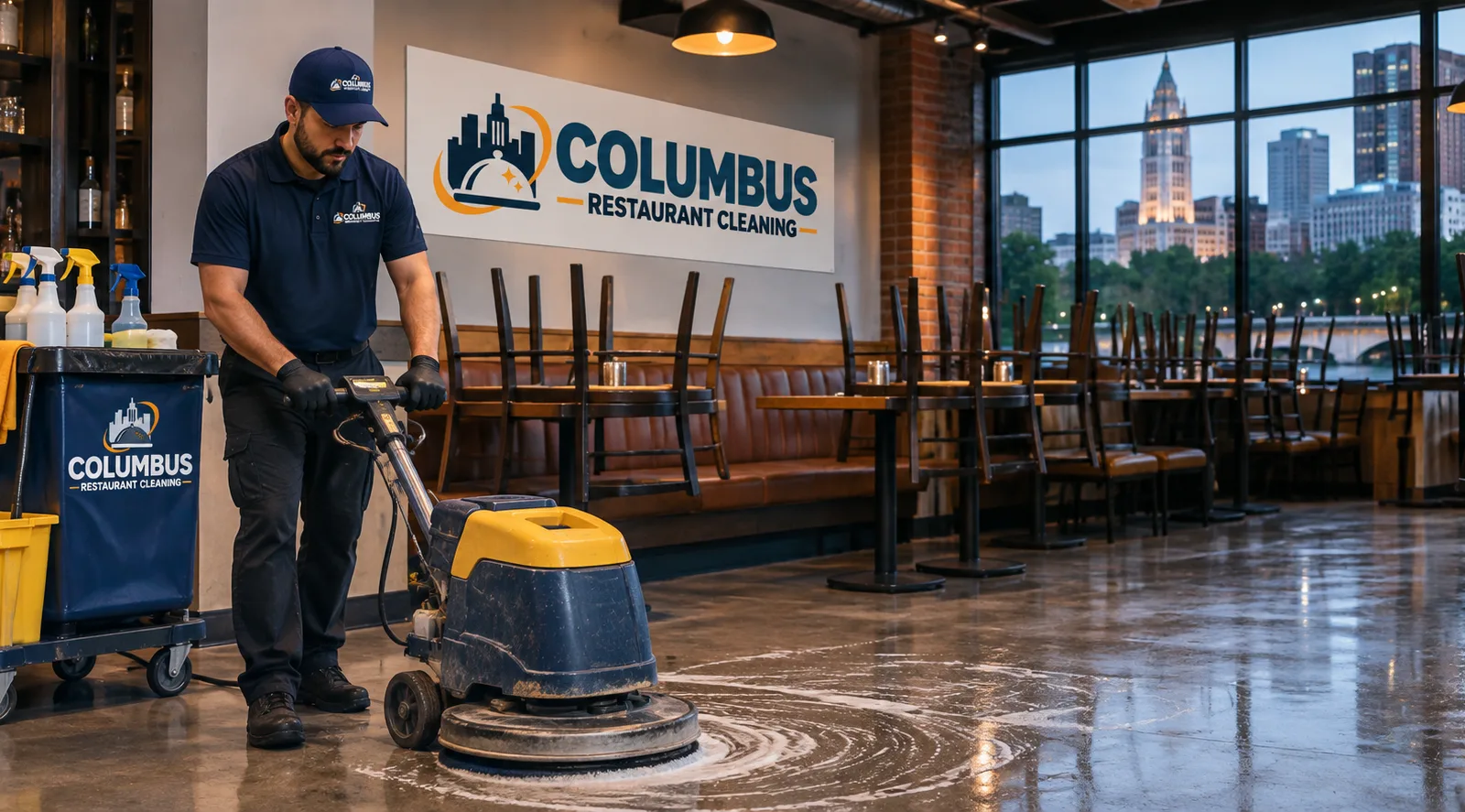
Walk into a clean kitchen, dining room and restroom before the first employee or guest arrives. We build recurring night cleaning around your closing routine, floor plan and sanitation priorities.
Overnight Restaurant Cleaning gives your staff a properly reset workplace without interrupting guests or the closing rush. Columbus Restaurant Cleaning schedules work after your team has finished its normal closing duties, then follows an agreed checklist for the kitchen, front of house, restrooms and employee areas.
We are restaurant service specialists serving Columbus, OH who build the scope around how your restaurant operates rather than applying a generic office-cleaning checklist. A counter-service dining room has different touchpoints than a full-service restaurant, and a high-volume kitchen may need more frequent attention around cook lines, dish areas and floor drains.
Night service is especially practical in commercial districts where cleanup must fit around late operating hours. Restaurants in the Short North may need scheduling that accounts for evening guest traffic, while downtown locations often coordinate access through secured buildings. Brewery District dining rooms can have bar areas and late closing routines, and Easton restaurants may need cleaners to follow shopping-center access procedures. Winter salt tracked through entrances and dining rooms also changes the floor-care workload during Columbus cold-weather months.
A written scope separates staff closing tasks from professional janitorial work. Your employees may already clear tables, wash serviceware, store food and complete required food-contact sanitation. Our night crew can take over agreed cleaning tasks after those duties are finished.
Kitchen work may include degreasing exterior equipment surfaces, cleaning backsplashes, wiping non-food-contact surfaces, removing trash and soil, and scrubbing or mopping floors with chemicals suited to the surface. Food-contact surfaces require the correct clean, rinse and sanitize sequence, with sanitizer used according to its label and your facility procedures. We do not treat cleaning and sanitizing as interchangeable steps.
Front-of-house service can include vacuuming carpets, damp mopping hard floors, wiping tables and seating as assigned, cleaning entry glass, dusting accessible surfaces and tending to visible marks around doors and partitions. Bar floors, server stations and employee break areas can be included when listed in the scope. Cleaning beneath movable items and addressing perimeter buildup can be rotated into periodic detail work.
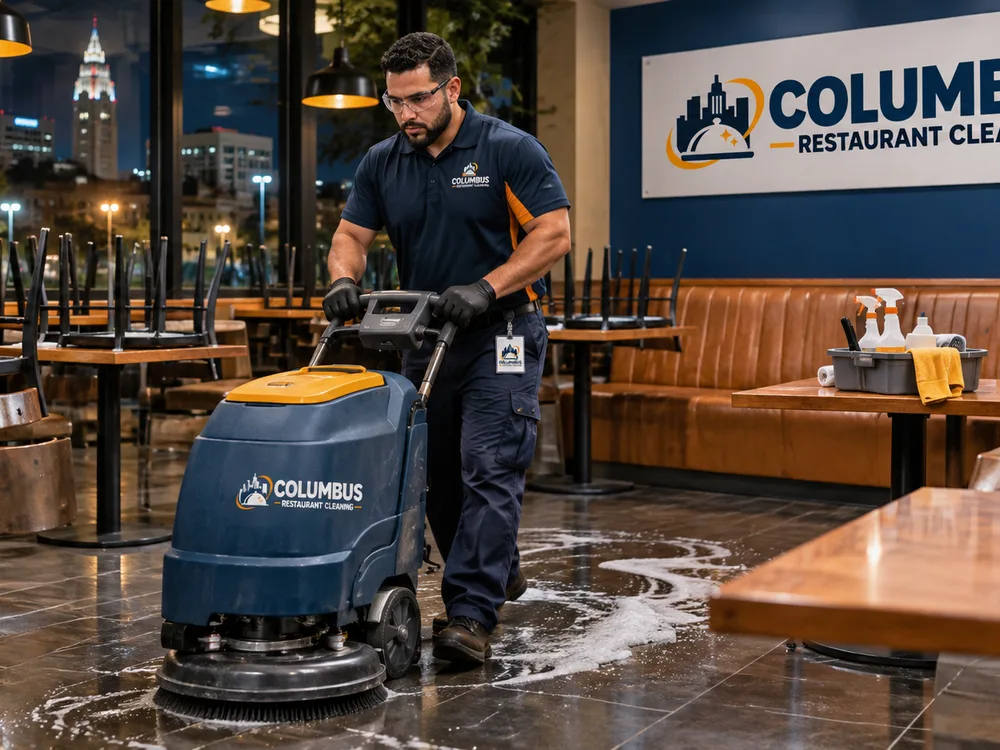
Remove loose soil, treat grease according to the surface and chemical label, scrub traffic lanes and edges, and clean accessible equipment exteriors included in the agreement.
Vacuum or mop flooring, address entry glass, wipe assigned furnishings and clean the touchpoints guests notice during the next service period.
Clean and disinfect toilets, urinals, sinks, faucets and assigned touchpoints. Restock customer-supplied consumables, empty waste and address odor sources rather than covering them with fragrance.
Collect trash from agreed areas, replace liners and move waste to the restaurant's designated collection point. Grease disposal and dumpster handling are included only when specifically scoped.
Plan scheduled attention for baseboards, floor edges, chair legs, vents, low ledges and other areas that do not require the same frequency as nightly floor service.
Use a location-specific checklist, access instructions and an issue-reporting process so managers know what should be completed during each visit.
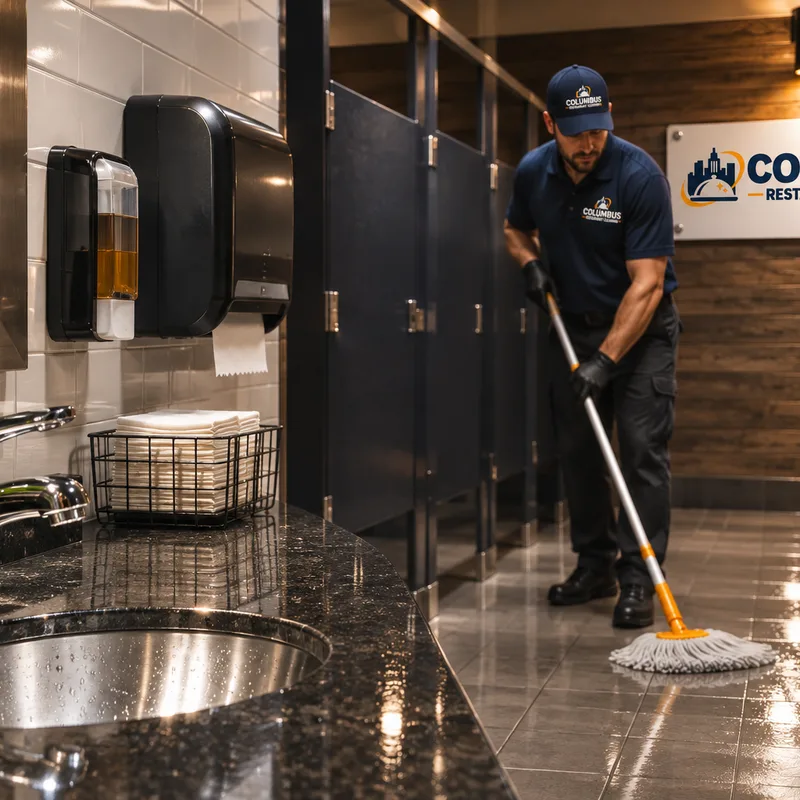
Guests often judge overall cleanliness by the restroom. A proper restroom routine starts with soil removal, then uses an appropriate disinfectant on compatible surfaces for the full label contact time. Spraying and immediately wiping a product may not meet that requirement.
Our restaurant restroom cleaning scope can include bowls and urinals, partitions, dispensers, sinks, mirrors, counters, floors, waste containers and frequent-touch points such as handles and latches. Crews can report leaks, damaged dispensers or persistent odor conditions they observe, although plumbing repairs and pest treatment require the appropriate provider.
Service frequency should match traffic and the work already performed by restaurant employees during operating hours. Overnight work provides a complete reset, but busy restaurants may still need staff restroom checks while open. Customer-supplied tissue, towels, soap and liners can be restocked when they are stored in an accessible, agreed location.
We review the kitchen, dining area, restrooms, bar or service stations, flooring and waste route. The walkthrough also identifies restricted areas, alarm procedures and the point when restaurant staff will be finished.
We separate nightly duties from weekly or periodic detail work. The written scope identifies included rooms, surfaces, consumable responsibilities and any tasks that remain with restaurant employees.
We agree on a service window, key or access procedure, alarm instructions and lockup expectations. Multi-tenant downtown buildings and shopping-center locations may also require coordination with property access rules.
The crew follows the location checklist in an order that avoids re-soiling finished areas. Chemicals are used according to their labels, and tools should be separated by area to reduce cross-contamination risks.
Managers can report missed items, changing traffic patterns or operational changes. The scope can be revised when hours, room use or cleaning priorities change.
Daily Restaurant Cleaning is often appropriate when kitchens produce steady grease and food soil, restrooms receive frequent use, or dining floors need a full reset after every service day. Nightly service also gives managers a consistent handoff: restaurant employees complete food handling and closing duties, then the janitorial crew performs the agreed cleaning after access begins.
Recurring Restaurant Cleaning can also follow a customized weekly schedule. Frequency depends on operating days, customer traffic, menu and cooking methods, floor materials, the size of the facility and what employees handle internally. A restaurant that closes on certain days may not need a seven-night plan, while a late-night operation may need a narrow access window before morning prep begins.
When comparing a Restaurant Janitorial Company, ask who supplies chemicals and equipment, how substitutions are handled, whether contact times are followed, and how keys, alarms and lockup are managed. The proposal should distinguish routine janitorial cleaning from hood and exhaust-system cleaning, pest control, grease-trap service and equipment repair. Those specialized tasks are outside a standard restaurant night cleaning scope unless separately arranged with qualified providers.
Restaurant janitorial cleaning is usually priced after a walkthrough rather than by a single public rate. The main cost drivers are cleanable square footage, service frequency, kitchen soil and grease levels, the number of restrooms, floor materials, operating schedule and the amount of detail work assigned to each visit.
Access matters too. A crew that can begin promptly after close and follow a stable lockup routine can plan labor differently from one waiting for changing closing times. Carpet extraction, machine scrubbing, floor finishing, high dusting and deep degreasing may be quoted as periodic work instead of being folded into every visit.
A useful proposal states what happens nightly, what happens on a rotation and what is excluded. It should also identify whether the restaurant or cleaning company supplies restroom paper goods, soap, liners and specialty chemicals. Columbus Restaurant Cleaning confirms the actual price after reviewing the facility, schedule and requested scope.
Check AvailabilityGet a written cleaning plan that fits your closing time, separates nightly duties from periodic detail work and gives managers a clear standard for every scheduled visit.
Call to ScheduleYes, service can be scheduled around a late closing when there is a dependable access window before morning preparation begins. The walkthrough should confirm when employees leave, how alarms and keys are handled, and whether a Short North, downtown or shopping-center property has separate building-access rules.
Frequency should follow operating days, traffic, cooking soil, restroom use and the closing work performed by employees. A high-volume kitchen may need nightly floor and exterior degreasing, while selected detail tasks can rotate weekly or periodically. Winter salt at Columbus entrances may also justify added floor attention during cold-weather periods.
Food-contact surfaces are included only when they are specifically assigned and the required cleaning, rinsing and sanitizing procedure is documented. Sanitizers must be compatible with the surface and used at the concentration and contact time stated on the product label. Restaurant staff remain responsible for food handling and any duties not transferred in writing.
No, those specialized services are not normally part of routine restaurant janitorial cleaning. Hood and exhaust cleaning, grease-trap service, pest treatment and equipment repair should be clearly excluded or separately identified so managers know which qualified provider handles each task.
Yes, one scheduled crew can service all agreed areas when the workflow and tools are controlled to reduce cross-contamination. Restroom cloths, mops and other tools should remain separated from kitchen and dining-area equipment, and crews should work in an order that avoids tracking soil back onto finished floors.
Expect a facility walkthrough and questions about hours, access, flooring, kitchen soil, restrooms, waste handling and employee closing duties. For a Columbus restaurant in a secured downtown building or managed retail property, the review should also cover loading access, security procedures and lockup responsibilities.
Tell Columbus Restaurant Cleaning about your operating hours, facility and current closing routine. We will review the work, define the recurring scope and provide a clear plan for keeping guest and staff areas ready for the next shift.
Tell us about your restaurant and cleaning needs. We’ll follow up to discuss the right scope for your space.