
Cooking Line Equipment
Ranges, griddles, fryers, ovens, and charbroilers collect grease and carbon around removable parts, splash areas, control faces, and adjacent surfaces. The method must suit each finish and component.
Serving Columbus, Ohio & surrounding areas
Open 24/7
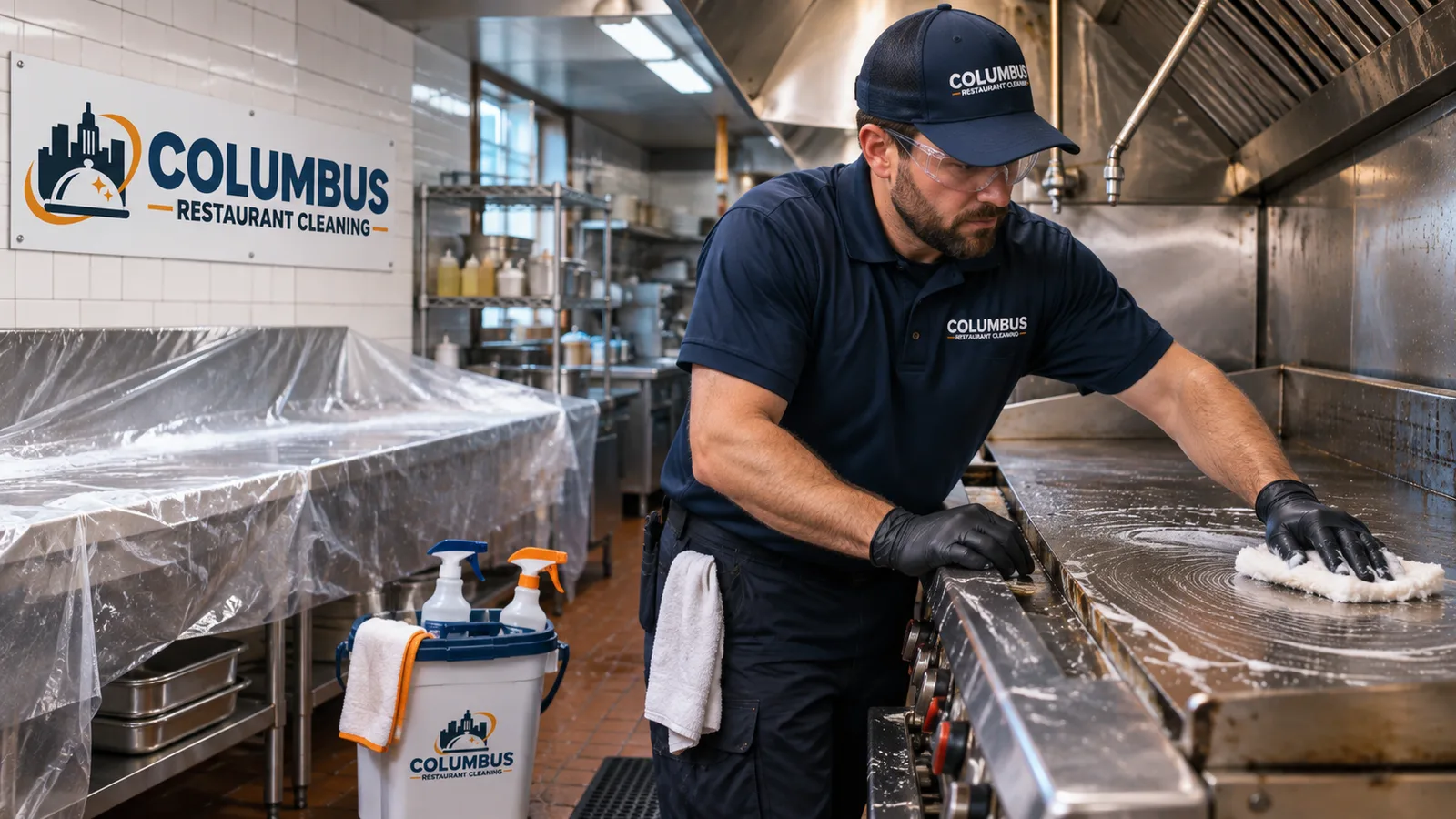
Remove baked-on grease and food residue from essential kitchen assets with a cleaning plan built around your equipment, operating hours, and food-service environment.
Restaurant Equipment Cleaning Reynoldsburg businesses can schedule should address the places routine shift cleaning cannot fully reach. Grease, carbonized food, crumbs, and residue collect around burners, behind control knobs, beneath equipment, along casters, and inside accessible components. Left in place, that buildup can create odors, attract pests, make inspections harder, and interfere with daily upkeep.
Columbus Restaurant Cleaning provides equipment-focused work for restaurants and other food-service operations in Reynoldsburg. Our team at a professional restaurant service company in Columbus plans the work around equipment type, current condition, access, and the hours available for cleaning. The scope is established before work begins so managers know which assets, exterior surfaces, and accessible components are included.
Reynoldsburg businesses operate within both Franklin and Licking counties, so the public health authority responsible for a particular facility can depend on its address. Equipment cleaning does not replace required employee sanitation, food-contact surface procedures, pest control, or mechanical service. It supports those programs by removing accumulated soil from specified equipment areas.
A practical scope may include ranges, ovens, flat-top griddles, fryers, charbroilers, steam tables, reach-in refrigeration, prep equipment, stainless steel tables, shelving, and movable equipment. The exact list depends on the kitchen and the manufacturer's care requirements.
Cleaning commonly targets removable grates, drip trays, splash zones, handles, exterior panels, legs, casters, equipment sides, and the floor area exposed when movable units are pulled forward safely. Technicians select degreasers and tools based on the soil and surface. Stainless steel, painted panels, aluminum parts, plastics, seals, labels, electrical controls, and seasoned cooking surfaces cannot all be treated the same way.
Food-contact parts require particular care. Cleaning removes soil; sanitizing is a separate step performed with an appropriate product, concentration, and contact time. Equipment must also be cool, shut down, and handled according to manufacturer guidance before detailed work starts.
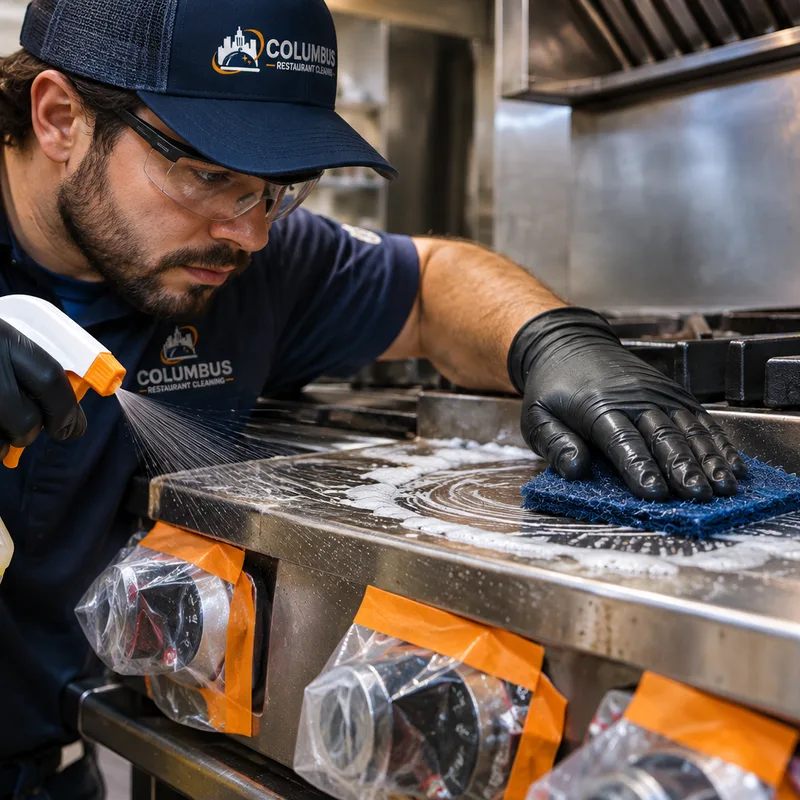
Ranges, griddles, fryers, ovens, and charbroilers collect grease and carbon around removable parts, splash areas, control faces, and adjacent surfaces. The method must suit each finish and component.
Reach-ins, prep coolers, and other refrigeration units may need exterior, handle, gasket, shelf, and accessible interior cleaning. Refrigeration coils and mechanical repairs require a separately defined scope.
Mixers, slicers, steam tables, warming units, and stainless work surfaces have joints, guards, legs, and undersides that can retain food soil. Removable components are handled according to equipment instructions.
Movable equipment can conceal grease, crumbs, and packaging debris. Safe access depends on utility connections, equipment weight, floor condition, and whether the unit is designed to move.
Handles, knobs, latches, control surrounds, and door faces receive constant contact. Detailed cleaning removes visible buildup without flooding controls or damaging markings.
Shelves, racks, and mobile carts can be included when they are emptied and accessible. The agreed scope should state whether contents will be moved by kitchen staff before arrival.
We identify the units to be cleaned, their condition, access limits, and any known manufacturer restrictions. Managers can also point out recurring problem areas or assets due for service.
The kitchen establishes an appropriate service window. Equipment may need time to cool, and staff may need to remove food, cookware, utensils, and stored products before cleaning begins.
Nearby food-contact items are removed or covered as appropriate. Electrical components, pilot assemblies, labels, control openings, and utility connections are kept clear of uncontrolled moisture and chemicals.
Technicians use appropriate scrapers, brushes, pads, degreasers, and controlled dwell time. Accessible removable parts are handled according to the agreed scope rather than forcing access to sealed components.
Residue is removed, surfaces are dried where needed, and treated equipment is reviewed with the manager. Any condition that appears to need repair, pest treatment, or specialized mechanical work is reported rather than concealed.
Kitchen management controls restart and food-production readiness. Staff complete any facility-specific sanitizing, temperature checks, or opening procedures required by the operation.
A full-service restaurant with a nightly closing window needs a different plan than a breakfast operation preparing food before dawn. Quick-service kitchens may have tightly packed cook lines and frequent fryer use, while school, healthcare, and institutional kitchens may have controlled access and fixed production schedules. Scope and timing should follow the actual operation.
Central Ohio weather also affects planning. During winter, tracked-in salt and moisture can add soil around entrances, storage paths, and equipment casters. Hot, humid summer conditions can make old grease and food residue more noticeable through odors. Regular detail work helps managers keep those areas from becoming a larger cleaning project.
Service frequency depends on cooking volume, menu, equipment design, staffing routines, and how quickly grease returns. A heavily used fryer station may need attention more often than a low-use holding unit. The best schedule is based on observed buildup instead of an arbitrary interval.
Restaurant equipment cleaning should begin with a written, itemized scope. It may define the named equipment, removable components, accessible sides, space beneath movable units, cleaning methods, exclusions, and expected service window. Clear preparation responsibilities also prevent delays. Kitchen staff may need to cool appliances, empty shelves, secure food, and provide safe access.
Several related tasks require separate qualifications or procedures. Exhaust hood and duct cleaning is specialized fire-safety work. Refrigerant systems, gas components, wiring, and equipment disassembly belong with qualified mechanical technicians. Pest activity requires pest-control treatment. A cleaner should report those conditions and avoid treating them as ordinary grease removal.
Managers should also ask how chemicals will be controlled around food areas, which surfaces cannot tolerate aggressive alkaline products, and how wastewater will be handled. Safety data sheets should be available for workplace chemicals. Labels and manufacturer instructions determine dilution, personal protective equipment, rinsing, and contact time. Mixing cleaning chemicals is unsafe, particularly products containing chlorine and acids or ammonia.
Check AvailabilityDescribe the equipment, current buildup, kitchen schedule, and access limits so Columbus Restaurant Cleaning can prepare a clear scope for your Reynoldsburg operation.
Call to SchedulePricing depends on the number and type of units, grease level, access, required disassembly, and the available service window. A small group of accessible appliances takes less labor than a packed cook line with heavy carbon buildup. Photos and an equipment list can support an initial scope, but the final price should reflect actual conditions and any preparation required.
Some exterior detail work may be possible during quiet hours, but cooking equipment generally needs a planned shutdown, safe cooling time, and separation from active food preparation. Reynoldsburg operations with short closing windows may benefit from dividing the equipment list across scheduled visits. The manager retains control of shutdown, restart, and food-safety checks.
The duration is set by equipment count, soil level, access, and cooling time. A limited scope may fit within one service window, while a long cook line or neglected buildup can require more time or staged work. An equipment inventory and current-condition photos help create a realistic plan before technicians arrive.
Those units can be included when their materials, condition, and access allow safe cleaning. The agreed scope should identify removable fryer parts, oven racks, griddle surfaces, refrigerator interiors, gaskets, or exterior panels individually. Sealed mechanical areas, electrical repairs, refrigerant work, and gas service are outside ordinary equipment cleaning.
Cleaning supports inspection readiness, but it cannot guarantee an inspection result or replace the restaurant's food-safety program. A facility must still follow applicable requirements for food storage, employee hygiene, sanitizing, temperature control, pest prevention, and facility maintenance. The responsible authority can depend on whether the Reynoldsburg address is in Franklin or Licking County.
Staff should remove food and loose items, empty included shelves or compartments, allow hot equipment to cool, and identify any unit that is damaged or awaiting repair. Access routes should be clear, and managers should disclose sensitive finishes or manufacturer restrictions. Gas, electrical, or water disconnections should only be handled by authorized personnel when required.
The interval should follow use, menu, grease production, equipment design, and the effectiveness of daily cleaning. Managers can track how quickly residue returns at fryer sides, griddle surrounds, oven doors, casters, and spaces between units. That record supports a schedule based on the kitchen's actual workload rather than a fixed interval.
Tell Columbus Restaurant Cleaning which assets need attention and when the kitchen can provide safe access. We will help define the work, preparation steps, and timing for your Reynoldsburg food-service operation.
Tell us about your restaurant and cleaning needs. We’ll follow up to discuss the right scope for your space.